Thursday, 27 February 2014

Web Assessments Basic SEO Course - Review

SEO, or search engine optimisation, is a way of boosting a website's visibility in a search engine's search results. There are all sorts of techniques you can use to help increase your site's rankings, and different ways you can keep track of what is happening - but it was all Greek to me. So I was very pleased to be invited to try out a basic SEO course free of charge and write a review.

The course is run by Web Assessments, which aims to be a 'one stop shop' for all things internet marketing-related. Their Basic SEO course consists of a series of chapters which you can take as slowly or as quickly as you like; I was given a free month's access but I took all the lessons over just a few days as I was keen to learn! The course usually costs £25 for one month but Web Assessments has given me a code that my readers can use to get a fantastic 50% off the cost of the course, which includes Q&A support, so you will pay only £12.50. Just use the code bloggers01 into the coupon code at the checkout when you sign up for the Basic SEO course here.

But of course what you want to know is whether the course is worth it? I had a mixed experience over all, some parts better than others, and did learn some very useful information. I think the course is aimed more at marketing than blogging, though of course even if you have an amateur blog you need to market it so a lot of the same tips apply.
www.carolinemakes.net
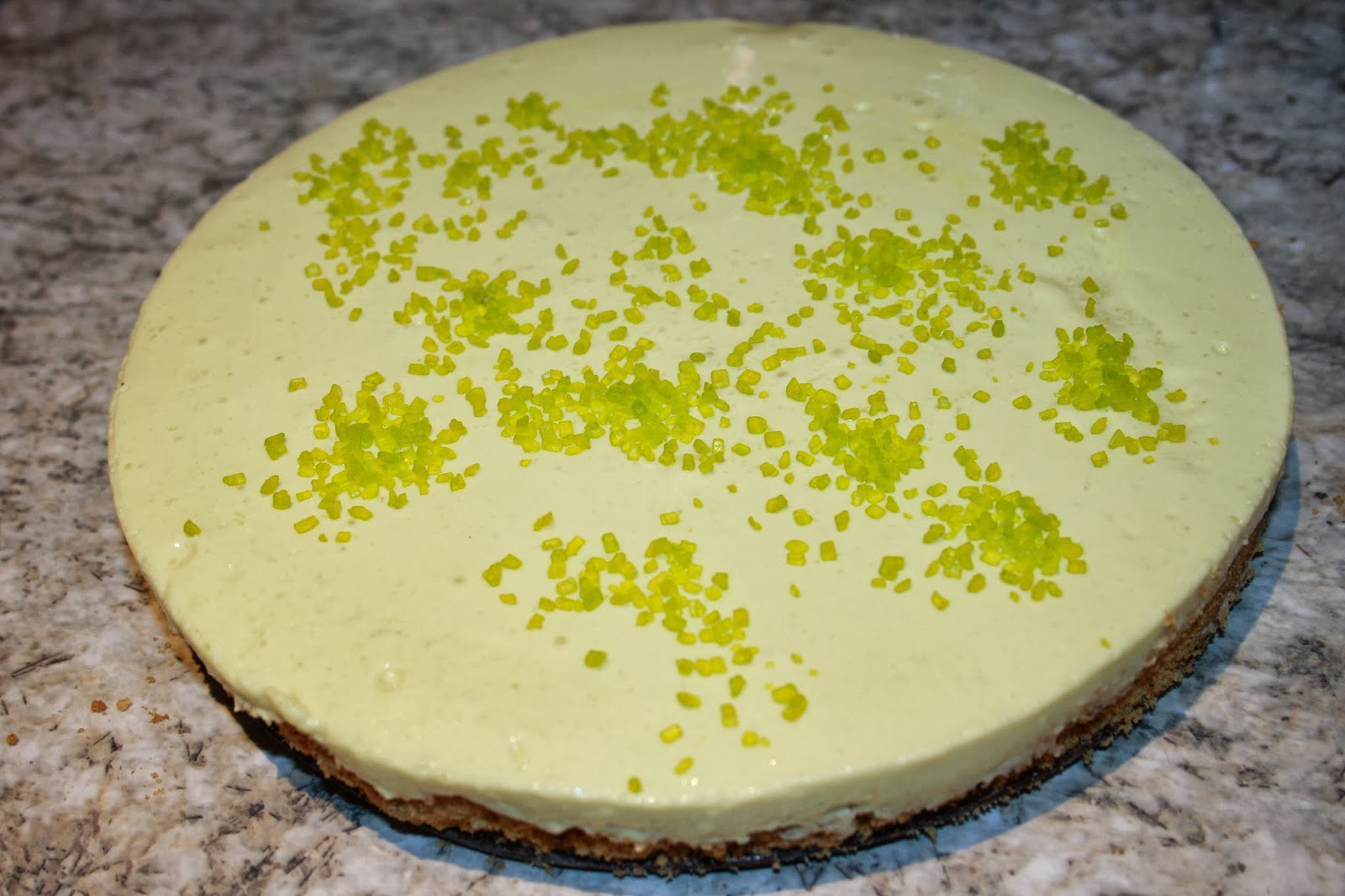
Lime cheesecake - coming soon on the blog

The information is good and broken down into easily digestible chunks. The overall basic SEO course is broken down into different elements such as "the fundamentals of SEO", "Key Google algorithm updates", "Linking Basics" etc. Within that, each section has a number of chapters, each quite short and covering one concept; you then mark it as complete and move on to the next. At the end of the chapters there is a quiz to check you have understood (or were paying attention!).

I am a complete novice when it comes to SEO which I imagine would be the case with most people taking a basic course, so at times I found the lessons referred to something that I didn't understand. Technical terms were not always explained at the time - for instance, one lesson referred to something I had to google, then the term that was used was actually explained in a later lesson. There is a glossary of terms that comes up when you roll over certain words, but in this case it turns out that one was missed out - which the site's owner has assured me will be fixed.

I'm not sure how useful the section on "Key Google algorithm updates" is - it's interesting and useful to have an understanding of Google algorithms, but this section mainly focuses on how they have changed and been updated and for someone who is completely new to SEO, it would be simpler just to explain how it works now. This section left me wondering what it was I actually need to do to boost my search rankings.

I also found the section on Google webmaster tools very confusing. It took me to the dashboard on my blogger page and allowed me to see various stats, which was interesting as it allows you to see where traffic has come from and what people have searched for, but what I felt this section was lacking was any advice on how to build on that and improve your results. I think this would probably be more useful for people working in marketing who need to keep track of stats like this, perhaps to pass on to a client - in my case it was interesting but I wasn't entirely sure how it had helped.

www.carolinemakes.net
Chocolate and beetroot heart cake

One very positive thing about this course is the feedback. There is the opportunity to post a question on any chapter and also a live chat function. When I posted a question asking for more of an explanation regarding sitemaps, the site's owner Simon responded and also added some more text to the chapter in question to make it clearer in case other people had the same query. Later, I posted a question on the live chat and Simon came back to me very quickly, answered my question about metadata and then when I thought we were done, he then asked for the web address of my blog and said he would take a look and tell me what metadata was being displayed. That was extremely helpful and excellent customer service!

One section which is unfortunately completely beyond me involves exporting your ranking reports into Excel and analysing it - I don't understand how they have constructed the table and get completely lost. I've had some useful conversations with Simon since then and he is considering a more step-by-step approach to help people through this section.

As I mentioned I did learn a couple of things which are extremely useful and I think will make a big difference to my blog rankings. Maybe some of you know this already but for me it was a complete lightbulb moment: I have a long list on the sidebar of my blog of all the other blogs I follow. It lets me keep updated with what other people are posting (I know I could do this through an RSS feed, but I'm lazy) and I thought it would be interesting to readers of my blog to see what else is out there. However, what I didn't know is that having this on a sidebar means it is present on each page of my blog - that is, every single blog post, which at the moment is over 600. The Basic SEO course tell me this "puts your site at risk because such a high influx in links built flags up warning signs to Google that you're trying to manipulate their Search engine." Wowzers!

The section on keywords is one of the most useful so I found it a little strange that this was towards the end of the programme. It stresses the importance of putting key words into headlines and says that some websites used to repeat the key words many times in the same piece of text, even if it then became grammatically incorrect or didn't make much sense. I also learnt how to see what the meta tag of my blog is, how to change it and why that matters, which I found also extremely useful.

There were some issues with grammar and punctuation which irritated me a little but Simon assures me that a proofreader is working their magic and all the mistakes will be fixed.  

The key question then is whether my blog rankings have increased - and indeed after doing this course and making some small changes, my ranking in the Foodies 100 did go up by about 20%. Of course, I can't directly attribute that to this course as the way the Foodies 100 is calculated is a little complicated and my rankings move up and down all the time - but this was a decent increase. There were some parts of this Basic SEO course that I found too technical, and other parts that I didn't think were especially useful for bloggers (and were perhaps more about marketing for clients) but I learned some important things and made some key changes to my blog that I think will make a real difference. I was also impressed by the customer service and interaction with Simon.


Thanks to Web Assessments for giving me free access to the Basic SEO course.


Tuesday, 25 February 2014

Forever Friends Gardener's Birthday Card


I haven't had time to do any card making for ages - getting on for a year I think! Since I had some time off between jobs I decided I would definitely make some time for this hobby. I made quite a few cards; some of them were pretty simple and quick such as this one.

I took a square white card blank and covered it with a piece of paper from a pack aimed at men - it included football print papers for instance but also some more generic patterns like this one. I had a pack of Forever Friends stickers on a gardening theme so I arranged some of these on the card, along with a few flower stickers from another pack as I felt it needed something to contrast. The banner is a die cut card that I bought in a pack of card making supplies from Ebay a long time ago, with a silver happy birthday outline sticker.

Monday, 24 February 2014

Meal Planning 2014 - Week 9


I'm starting my new job this week and don't know exactly what time I will be home in the evenings, but I know it will be later than in my last job and probably later than my boyfriend most days (though I will still be the one cooking dinner!). So I need some quick and easy recipes this week while I figure out my new routine.

Monday
Breakfast yogurt

Lunch will buy something out to explore the area near my new office

Dinner takeaway with my boyfriend who didn't want me to cook after my first day at work!


Tuesday
Breakfast yogurt or cereal

Lunch out with new colleagues

Dinner out at Drink Shop Do

Wednesday
Breakfast yogurt or cereal

Lunch sandwich

Dinner Fish in breadcrumbs/ chicken in breadcrumbs and chips

Thursday
Breakfast yogurt or cereal

Lunch sandwich

Dinner salmon and hollandaise sauce

Friday
Breakfast yogurt or cereal

Lunch sandwich

Dinner sausage and mash


Saturday
Breakfast yogurt or cereal

Lunch baked potatoes

Dinner homemade lasagne

Sunday
Breakfast yogurt or cereal

Lunch soup with fresh bread

Dinner roast chicken


Sunday, 23 February 2014

Zuppa Toscana


 This zuppa Toscana translates as a Tuscan soup; it's a hearty winter warmer and great for a weekend lunch. I found a recipe on Food.com; this is apparently it's a version of an Olive Garden recipe though I've still not managed to eat at that restaurant chain when I've been in America. I adapted the recipe to make it lower in fat, by using fat-free natural yogurt instead of double cream, and I used chicken stock made from a stock cube melt rather than a can of chicken broth. I also missed out the kale and the bacon as I didn't have any! This is the sort of thing you can knock up from leftovers and store cupboard ingredients provided you have some sausages in the freezer (you could also use leftover cooked sausage).

To serve two, you need:
4 Italian sausages - I used a Sicilian sausage from Sainsbury's
2 large potatoes, thickly sliced
1 onion, chopped
1 clove garlic, crushed
1 chicken stock cube in about a pint of water
2 heaped tbsp fat free natural yogurt


Cut the sausages into chunks and brown in some oil or Fry Light in a large saucepan. Add the onion and garlic and cook for a few minutes. Then add the potatoes and the chicken stock, bring to the boil and simmer until the potatoes are tender and the liquid has reduced.


Finally remove the pan from the heat and stir in the yogurt.


Serve with bread - I made this za'atar bread, also for Alphabakes!


I am hosting Alphabakes this month; you have until the 25th to send your z recipes to alphabakes@gmail.com. Check out which letter we are baking with next month on my co-host Ros's blog, The More Than Occasional Baker.


Saturday, 22 February 2014

Cheese-stuffed meatballs


cheese stuffed meatballs

These cheese-stuffed meatballs are really simple and tasty and are a good way of jazzing up spaghetti bolognese if it's a dish you make a lot or you have someone who isn't that keen on pasta (strangely enough there are people like that out there!). Somehow the idea of a cheese-stuffed meatball is so much better than spaghetti bolognese even though there's not all that much difference!

I made these to use up some freshly minced beef I made after buying chuck steak from the local butcher and trying out my Kitchenaid mincer attachment. You can mix the mince with whatever you like such as finely diced onion, garlic, oregano and other herbs and a little salt. Then cut cubes of hard cheese - I've used cheddar here, but you could also try halloumi. Form the mince into a ball around the cheese.


Roll into balls and place in the fridge for about half an hour to firm up.


When ready to cook, heat a frying pan and spray with Fry Light or a little oil and fry the meatballs on all sides until browned.


In the meantime cook some spaghetti according to the packet instructions. You can also make a tomato sauce from scratch if you have time, but here I just used passata as I didn't want to compete too much with the flavour of the meatballs.


As you can see, when you cut into the meatballs, the cheese is softened but still intact; it hasn't oozed out or melted into the meat. These went down very well with my boyfriend!


In fact because I made these for my boyfriend as I knew he would love it (more than spag bol) and because I love him (awww)  I'm sending this to Cheese Please, hosted by Fromage Homage, which has a theme this month of cheesy romance.


I'm also sending this to Pasta Please, as the challenge this month focuses on spaghetti and these meatballs go perfectly with spaghetti. The challenge is hosted this month by a blogger I haven't come across before, called Feeding Boys and a Firefighter, on behalf of Jacqueline at Tinned Tomatoes.

Friday, 21 February 2014

Rhubarb And Custard Cake


rhubarb and custard cake

This month's Food 'n' Flix selection is Babette's Feast, which was chosen by Camilla at Culinary Adventures with Camilla. It's a 1987 Danish drama with English subtitles which in itself was enough to put me off - but it won the Oscar for best foreign film and was actually very good. The film begins with two elderly Danish sisters who have a French servant/cook called Babette, which we soon realise is strange given the remote location and their frugal lives. The film then goes back to the sisters' youth to explain how this came about and how Babette came to live with them. [Spoiler alert] she is essentially a refugee and spends decades living with the sisters, her only link to France a lottery ticket that a friend in Paris buys for her every year. One day Babette wins 10,000 francs on the lottery, and the sisters expect her to return to France in style and resume her life there. Instead, Babette decides to thank the community that has taken her in and become her friend, by spending the money on a feast for everyone. She prepares several courses of an exquisite French meal, and her friends only discover later that she has spent every centime of her winnings on the food for 12 of her friends. What's more, as they are eating, one diner - the only one who is particularly well travelled, having worked as an attache in Paris - comments that several of the dishes remind him of the famous Cafe Anglais in Paris. He waxes lyrical about the food - which funnily enough cost 10,000 francs for a meal for 12. Babette has successfully made some of the Cafe Anglais's signature dishes and what do you know, the chef at the Cafe Anglais was female and disappeared at the start of the war... I almost gasped aloud when I realised where the story was going and that Babette was of course the chef at the Cafe Anglais. At the end when her friends realise she has spent all her winnings and is now poor again, Babette says: "an artist is never poor".


It really is a lovely film and food takes centre stage; from the austerity of the sisters' lives to the preparations Babette makes for her feast, where the film literally becomes more vibrant and colourful. I wanted to recreate something that Babette makes for her feast, but she doesn't make it easy! She buys a very expensive red wine and makes turtle soup (from real live turtles!), quails in puff pastry, caviar on blinis with sour cream and a decorated bundt cake for dessert.

I started by thinking about what flavours I like, and I have seen a few bloggers recently recreate favourite desserts or chocolate bars in cake form, which got me thinking. I used to love rhubarb and custard sweets, and I had a tin of rhubarb in the cupboard which I bought for another recipe and never used, so I decided to make a rhubarb and custard bundt and decorate the top with rhubarb and custard sweets.

Rhubarb and Custard Bundt - an original recipe by Caroline Makes

This makes quite a big cake - my Nordicware bundt tin is quite large and deep. As it is a bundt rather than a layer cake, there is a layer of custard baked into the middle of the cake.

For the cake:
400g butter
225g caster sugar
4 eggs
400g plain flour
2 tsp baking powder
60g custard powder
50ml milk
539g tin rhubarb in light syrup

For the custard:
4 tbsp custard powder
4 tbsp caster sugar
500ml milk

To decorate:
about 100g rhubarb and custard sweets

Preheat the oven to 180C and grease a bundt tin; I used PME Cake Release. First make the custard: whisk the custard powder and sugar with a little of the milk, then mix in the rest of the milk. Bring to the boil and simmer, stirring, until thickened. Leave to cool; cover the pan with clingfilm so the custard doesn't form a skin.


For the cake, cream the butter andthe sugar in a large bowl. Gradually add the eggs then fold in the flour, baking powder and the custard powder.


Gently mix in the milk, and 50ml of the syrup from the tin of rhubarb. Spoon half the cake mixture into the bundt tin.


Spoon the cooled custard on top.


Spoon the rest of the cake mixture into the tin, and spread out the rhubarb pieces on top. I had been expecting the rhubarb to sink into the cake when it was cooking, but it stayed on the top -which of course will be the bottom of the cake.


Bake in the preheated oven for 1 hour. Cover with foil if the top is getting too brown.


Allow to cool in the tin then turn out onto a wire rack to cool.  I love the swirled effect from my Nordicware bundt tin.


I bought some rhubarb and custard sweets, which I originally intended to crush and sprinkle over the top, but try as I might, I couldn't make so much as a dent in them! I didn't want to use my food processor in case it damaged the blades. So then I had another idea...


... melt the sweets in the microwave! This worked really well, though you do have to be very careful as the sugar reaches boiling point.


Use a teaspoon to drizzle the melted sweets over the top of the cake. The sugar cools very quickly and forms very thin strands which looks pretty and gives a crunchy texture without eating large pieces of sweets.


 Here's a side view of the finished cake so you can see the shape


And here's the view from the top


 The best thing about this cake is that it really does recreate the flavour of the sweets. You can see from this cross-section that the rhubarb is at the bottom, and there is a distinct layer of custard in the middle, which has kept its texture despite being baked in the oven, and the melted sweets give a sweet and sticky crunchy topping.

rhubarb and custard cake

Here you can see the layer of custard a little better, running through the middle of the cake.


 I am sending this to Food 'n' Flix, hosted by Culinary Adventures with Camilla.


Thursday, 20 February 2014

Pork in a Spiced Cider and Mustard Sauce


 I created this original recipe for the Co-operative Electrical's Winter Warmer competition. I thought about the flavours and textures that I like to eat on a cold winter's day and wanted as well to keep the recipe largely British, to showcase some of the Co-operative Food's best ingredients. Pork and apples is a great traditional combination so I decided to use cider rather than apple sauce and slow cook the pork in the oven in a casserole dish so it would be beautifully tender. I love the zingy taste of mustard and there are some great mustards available from the Co-op, so I decided to combine two of them from the Co-operative's Truly Irresistible range, the wholegrain and the dijon, in this recipe. However, I also wanted to add an original twist and a slightly unexpected flavour that people would enjoy and perhaps wonder what it was - so I used star anise. Mushrooms add to the texture and make the dish more substantial; what's more this is a relatively inexpensive recipe as you could substitute pork chops for the pork fillet.

To serve 4, you need:
about 750g pork fillet
salt
pepper
1 tbsp olive oil
1 small onion, diced
100g button mushrooms, halved.
150ml Co-operative Tillington Hills premium dry cider
100ml pork or chicken stock made up from a stock cube
1 tbsp Co-operative Truly Irresistible wholegrain mustard
1 tbsp Co-operative Truly Irresistible dijon mustard
2 star anise
150ml plain yogurt (optional)
1 tsp cornflour
Preheat the oven to 180C. In a large frying pan, season the pork fillet and sear on both sides in a little oil then remove from the pan.


In the same pan, fry the chopped onion and button mushrooms until browned.


Make up the stock cube and mix with the cider in a large jug. Stir in both mustards. Place the pork fillet in a large casserole dish, add the onion and mushroom and star anise, and pour the liquid over the top.

Cover and bake in the oven for 45 minutes. Five minutes before the end, remove from the oven, carefully pour off the liquid into a small pan and re-cover the pork to keep warm. It doesn't matter if a little of the onion and mushroom gets into the pan, but do remove the star anise.

Mix the cornflour with a little water and stir into the liquid in the pan. Heat, stirring, until the liquid has thickened and reduced.


If you want a thicker, creamier sauce, you can stir in a couple of spoonfuls of plain yogurt or creme fraiche. Slice the pork fillet on the diagonal and pour over the sauce to serve.


This goes really well with mashed potato and green veg like cabbage or broccoli and carrots. It's a lovely winter warmer!

I am sending this to Co-operative Electrical for their Winter Warmer competition; you can enter the competition here.

Wednesday, 19 February 2014

Restaurant Review - Corney & Barrow, Old Broad Street, London

Restaurant name: Corney & Barrow
Location: Old Broad Street, London
Description: City wine bar with a decent food menu. This is a spacious venue with a mixture of restaurant-style seating and high bar stools at small round tables.
Reason for visit: Before Christmas I was approached by someone I used to work with who was interested in having me come and work with him. He took me here for lunch (as it was halfway between our offices) to put the job to me, then we met here again for lunch a month or so later to go over some of the finer details. Then when I accepted the job, and had some more questions, we went here for lunch again! It was mainly through convenience but it kind of became the place where my new and exciting job started to take shape... so even though I didn't take any photos of my food (my mind was clearly on other things!) I wanted to write about this place where my career started to take a new direction.
I ate: The first time we came, I had the soft herb marinated half roast chicken, which came with a rich red wine jus and  new potatoes. The second time, I ordered the salmon fish cakes, which are made with a combination of fresh (I think poached) salmon and smoked salmon, and served with a lemon mayonnaise and chunky chips. Finally the third time I had the homemade Casterbridge beef burger and chips.
The food was: Very good - it's quite upmarket (more wine bar than pub) so the chicken I had the first time looked quite fancy with the jus drizzled around it. The fishcakes were very good and the lemon mayonnaise really set off the flavours, and the burger was big and juicy.
The atmosphere/service was: Good - the staff were happy to let me move from a table with the high bar stools to a restaurant-style table when I was wondering if I would be able to climb onto the bar stool in my skirt! I also wanted to make a good impression as this was effectively a job interview (though obviously I went into the office for a formal interview) and in the past I have been known to struggle to get down from a high bar stool (well, I'm really short!) and didn't want to embarrass myself!
Price range/value for money: Strangely, the burger costs more than the chicken, though prices are all around £9 - £13 for mains, which includes the side order - unlike some places I have been recently which charge £10 for a burger and fries are extra.
Would I recommend it? Yes, it's in a good location and while the menu isn't huge, there's a decent amount of choice and the food is tasty.

Tuesday, 18 February 2014

Za'atar Bread Rolls


 I bookmarked this recipe for za'atar bread rolls- spellings also include zaa'tar and zatar- as I thought it would be a good entry for Alphabakes when z came up, which it finally did this month. Za'atar is a Middle Eastern spice blend made of oregano, thyme and sumac - sumac is something I've never been able to get hold of in the supermarket so I didn't hold out much hope of finding za'atar, so I ordered some over the internet.

The recipe comes from a blog called Cutchi Kitchen; I halved the quantities and rolled them up rather than twisted them, and left out the milk powder as I didn't have any, but other than that followed the recipe exactly.

Mixing the ingredients in a bowl:
 

Here's the spice blend

Sprinkling over half the dough


After placing the other piece of dough on top, I cut strips using a pizza wheel and rolled them up.


After baking in the oven:


I ate the bread rolls with some homemade soup. The spice blend didn't have a particularly strong flavour but it was distinctive and went well with the soup.


I'm sending these to Alphabakes, the blog challenge that I co-host with Ros of The More Than Occasional Baker; I am hosting this month and you have until the 25th to send in your z recipes to alphabakes@gmail.com!


I'm also sending this to Bookmarked Recipes, hosted by Jacqueline at Tinned Tomatoes.


Monday, 17 February 2014

Meal Planning 2014 - Week 8


I've got a whole week off work before I start my new job, which is great! My parents are coming to visit for a few days and I've got more driving lessons and a few more fun activities planned. This week I've found a lot of good recipes in the latest Slimming World magazine, which I have supplemented with ideas from a few other books.

Monday
Breakfast cereal, toast or yogurt

Lunch salmon, broccoli and potato frittata adapted from March/April Slimming World Magazine p.62

Dinner pizza-topped chicken with chips from March/April Slimming World Magazine p.35


Tuesday
Breakfast cereal, toast or yogurt

Lunch soup and bread I had on the meal plan for last week but didn't make

Dinner out at chocolate making course

Wednesday
Breakfast cereal, toast or yogurt

Lunch rest of frittata from Monday or soup from Tuesday

Dinner pizza


Thursday
Breakfast cereal, toast or yogurt

Lunch My parents are coming to stay for a few days and arriving in time for lunch. I'm planning to experiment with spam so will make spam and mushroom pancakes from this recipe.
Dinner Pork fillet in cider (a recipe I've developed myself). Dessert: Slimming World key lime pie. March/April SW magazine, p.58


Friday my parents visiting
Breakfast cereal, toast or yogurt

Lunch spring onion, ham and mustard tart from this recipe with potato salad

Dinner Slimming World lamb rogan josh, cooked in the slow cooker - from March/April SW Magazine p.34

Saturday
Breakfast cereal, toast or yogurt

Lunch sticky hotdog jackets from this recipe

Dinner out with my parents and my boyfriend and his mum


Sunday 
Breakfast cereal, toast or yogurt

Lunch spam and halloumi kebabs from this recipe for me, bacon sandwich for the other half

Dinner Slimming World Diet Coke chicken with homemade chips


Also today I will make pork ragu from this recipe for next week

Sunday, 16 February 2014

Cookery Workshop with French Glace Cherries

French glace cherries were quite common in my childhood, always as the topping on a dessert - be it a knickerbocker glory or on top of a white iced fairy cake (we didn't call them cupcakes in those days!). I didn't like them and would always pick them off! So I was intrigued when I was invited to a cookery workshop aimed around one ingredient, and one ingredient alone: French glace cherries! The invitation promised to show us different recipes using cherries and I knew I had to go.
French Glacé Cherries

The class was hosted at the Central Street Cookery School in London, which I didn't even know existed - I can't believe I had missed such a gem! It's part of St Luke's Community Centre and the kitchen - which has a huge table and lots of ovens and sinks, so is perfect for teaching - can be hired for private events and cookery classes. The best thing is that the money they make from doing this goes back to St Luke's to help them provide food-related community projects.

The afternoon session that I attended was sponsored by French Glace Cherries and we were well looked after by the company's PR, Pauline at Sopexa. The company had teamed up with Cindy, a French chef who runs a baking business, Petit Gateau. Her blog also has information about her business and tons of great recipes.
Cindy and Pauline

 Cindy and Pauline welcomed us and told us a little about French glace cherries - originally they were candied not to satisfy a sweet tooth but as a way of preserving the cherries, and this process dates back to about 1600! I also discovered that glace cherries can be different colours - some batches darker than others - and this is a deliberate process, based on the juice that is used to stain them.


These ones come from Provence, where the growing conditions are just right for cherries, and I learned why it is important to use good quality cherries - not all cherries retain their flavour, shape and texture throughout the baking process (but these will), and cheaper glace cherries allow a lot of the sugar to seep out so you end up with a sticky residue at the bottom.

Cindy had already made a variety of treats for us to try,  which were quite simply amazing. In the pictures below you can see French glace cherries wrapped in bacon, which are then baked in the oven; mini oatcakes that contain chopped French glace cherries, topped with a French glace cherry chutney and blue cheese, and some mini French glace cherry smoothies, complete with a red and white striped straw. So cute!


 And in the pictures below, you can see some mini cheesecakes with a layer of French glace cherry compote, and chocolate fondants topped with a French glace cherry - I couldn't decide which of these two were my favourite! 


Cindy had devised some different recipes for us to cook on the day - Frencg glace cherry 'jaffa cakes' and French glace cherry financiers. We began by making the jaffa cakes as they needed to set in the fridge. First we made a genoise sponge for the base, which involved whisking eggs and sugar in a bain marie.Here you can see where I have finely chopped some French glace cherries for the filling.


Cindy had already made us a jam from French glace cherries, as we wouldn't have had time to do this in the class; we mixed this with gelatine and added the chopped cherries and put it in the fridge to set.


We cooked the genoise sponge in a silicon cupcake tray so we would have small flat discs for the base of the jaffa cake.


When the jelly came out of the fridge, we used a small round cutter to cut out circles.


It's much easier to make these if you keep the cakes in the silicon mould!


We placed a circle of jelly on each cake then melted some chocolate, and after waiting for it to cool a little (so it wouldn't melt the jelly), we poured it over the top.


Finally we decorated them with some candy and sugar paper hearts - it was nearly Valentine's day after all!


The finished French glace cherry 'jaffa cakes'. They tasted fantastic and the cherry was an interesting alternative to orange that I think worked really well.

Next we made financiers, a traditional French cake using ground almonds. Here's Cindy demonstrating; the full recipe is on her website here.


We heated butter so it was slightly burnt and golden brown; it takes on a nutty flavour so is called a 'beurre noisette'. Then you mix flour, ground almonds and sugar and add the butter. Then add egg whites - so this is a good recipe if you are using egg yolks for something else and have the whites left over!


We added chopped French glace cherries to the batter once it had gone into the pan. We used a cute heart-shaped silicon mould for this but you could use any shape pan or muffin tin even.


After just a short time in the oven, they were ready:


Very pretty! And again another recipe I wouldn't have thought to use French glace cherries in.


Thanks to French Glace Cherries, Pauline at Sopexa and Cindy at Petit Gateau for organising and hosting the event and for inviting me - and for my fabulous goody bag! It was great to meet some other bloggers and to learn some new recipes.